The short answer
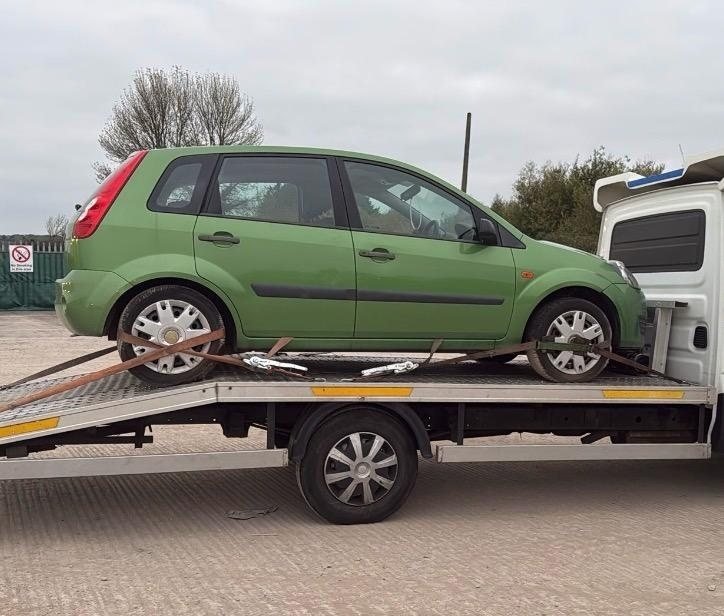
If your car is totally stuck, meaning it will not roll, steer or start, it needs a flatbed recovery truck, and often a set of dollies to get it onto the bed. A rope or a simple tow behind another vehicle is the wrong choice, because those only work when all four wheels can turn.
A dolly is a small wheeled cradle that goes under a tyre. It lifts that wheel off the ground and lets it roll, so a recovery driver can move a car even when its own wheel is locked, flat or damaged.
What "totally stuck" actually means
A car is totally stuck when it cannot be pushed, rolled or steered normally. That is different from a car that simply will not start, because a car that will not start can usually still roll in neutral. These are the common causes:
- A seized or locked brake. The wheel will not turn at all, often after the car has been parked for weeks or the handbrake has rusted on.
- A handbrake that will not release, including electronic parking brakes that lose power with a flat battery.
- Steering lock or no key. The wheels point one way and will not turn.
- An automatic stuck in Park, where the gearbox will not release and the drive wheels will not roll.
- Flat or shredded tyres, or damage to an axle or suspension after a pothole or a kerb.
- Mud, a verge, a ditch or a soft surface, where the car is physically trapped even though nothing is broken.
- A tight space, such as an underground car park, a narrow drive or a space boxed in by other cars.
Electric cars and four-wheel-drive cars add one more rule: many of them should not be towed with any wheels on the ground. Always check the handbook, or tell the recovery driver the make and model so they can check. See our guide to electric vehicle recovery for more.
The types of recovery, and which ones work on a stuck car
- Flatbed (also called a rollback or slide-bed). The bed tilts and slides back to the ground, and the car is winched on. All four wheels end up off the road, so it does not matter whether they turn. This is the safest option for a locked, low, automatic, four-wheel-drive or electric car, and it is the main answer for a totally stuck vehicle.
- Winch recovery. A cable pulls the car out of mud, off a verge or out of a ditch. It is usually the first step, and the car is then loaded onto the flatbed.
- Dollies (skates). Small wheeled cradles that go under the tyres so the car can be rolled or turned in a tight space and onto the bed.
- Wheel-lift tow. A boom lifts the front or rear wheels, and the other two roll along the road. It only works when the wheels left on the ground can still turn, so it is not suitable for a car with locked wheels, and many electric and four-wheel-drive cars cannot use it.
- Tow rope or tow bar. Another vehicle pulls the car with its own wheels on the ground. It needs working steering, working brakes and free-rolling wheels, so by definition it fails the test for a totally stuck car and is not safe.
What is a dolly?
In vehicle recovery, a dolly is a small wheeled platform or cradle that sits under a tyre. The wheel rests on it, the dolly rolls, and the car moves even though the wheel itself cannot turn. Recovery drivers also call them skates or go-jacks.
The word has two common meanings, so it helps to know which one is meant:
- Wheel dollies (skates). A set of two or four, one under each wheel that needs help. This is the kind used on stuck cars. They let a driver slide a car sideways, turn it in a tight space or roll it onto a flatbed.
- Tow dolly. A two-wheeled trailer that lifts the front wheels of a car so the rear wheels roll on the road. It is more common abroad than on UK roads, and it is not the answer for a car whose wheels are locked.
When a dolly helps: a seized brake, a locked wheel, a flat tyre, a parked car boxed in, or an underground car park where a truck cannot get close. What it cannot do: a dolly does not tow a car down the road, because it is a way to move a car a short distance and load it. If the axle is broken or the car is deep in mud, a winch is needed first.
Not every recovery truck carries dollies, so if you think you need them, say so when you call.
Which recovery for which situation
- Seized brake or locked wheel: flatbed with dollies. The locked wheel cannot roll, so it is lifted onto a dolly and loaded.
- Handbrake will not release: flatbed with dollies, because the rear wheels will not turn.
- Automatic stuck in Park: flatbed. The drive wheels cannot roll, so the whole car goes on the bed.
- Flat tyre or damaged axle: flatbed, with dollies if needed. A damaged wheel cannot be rolled safely on the road.
- Stuck in mud, a verge or a ditch: winch recovery, then flatbed. The car has to be pulled free before it can be loaded.
- Underground car park or tight space: dollies, then flatbed outside. A truck often cannot get in, so the car is rolled out first.
- Electric or four-wheel-drive car: flatbed. Many cannot be towed with any wheel on the ground.
- Car will not start but rolls freely: flatbed or wheel-lift. This is a normal breakdown, not a stuck car.
What to tell the recovery driver when you call
The right truck and tools depend on the details, so give them up front. It also helps the driver quote accurately and arrive prepared:
- Where you are. The road or address, and a postcode or what3words location. For a car park, say which level.
- The vehicle. Make, model, and whether it is automatic, electric or four-wheel drive.
- What is wrong. For example "the car will not roll", "the handbrake is stuck", "a wheel is locked" or "it is in mud".
- Access. Is it in a tight space, a low-ceiling car park, a narrow lane or on a verge? Are the keys with you?
- Where it needs to go. A garage, your home or another address.
If you are on a motorway or a busy road, do not try to move the car yourself. Put your hazards on, get everyone out and behind the barrier, and then call. Our guide on what to do if you break down on a motorway has the full steps.
Frequently asked questions
Can a car with a seized brake be recovered?
Yes. It is loaded onto a flatbed with dollies under the locked wheel, so nothing is dragged.
Is a dolly the same as a trailer?
No. A wheel dolly is a small cradle for a single wheel, while a trailer carries the whole car.
Do I always need a flatbed?
For a stuck car, almost always. A wheel-lift or a tow only works when the wheels left on the ground can roll freely.
Can an automatic in Park be towed?
Not safely on its drive wheels. The car should go on a flatbed, so the gearbox is not damaged.
Do all recovery trucks carry dollies?
No. Mention a locked wheel, a stuck handbrake or a tight space when you call so the right equipment is sent.
Car totally stuck? We come to you.
The bottom line
A totally stuck car needs a flatbed, and often dollies or a winch first. 711 Breakdown Recovery is a mobile service: we come to you, assess the car on the spot and confirm the price before we start. We cover Greater Manchester, Merseyside and Cheshire, 24/7. Send us your location and a photo of the problem on WhatsApp and we'll tell you what it needs.